One More Hour of Light, Odysseas Yiannikouris
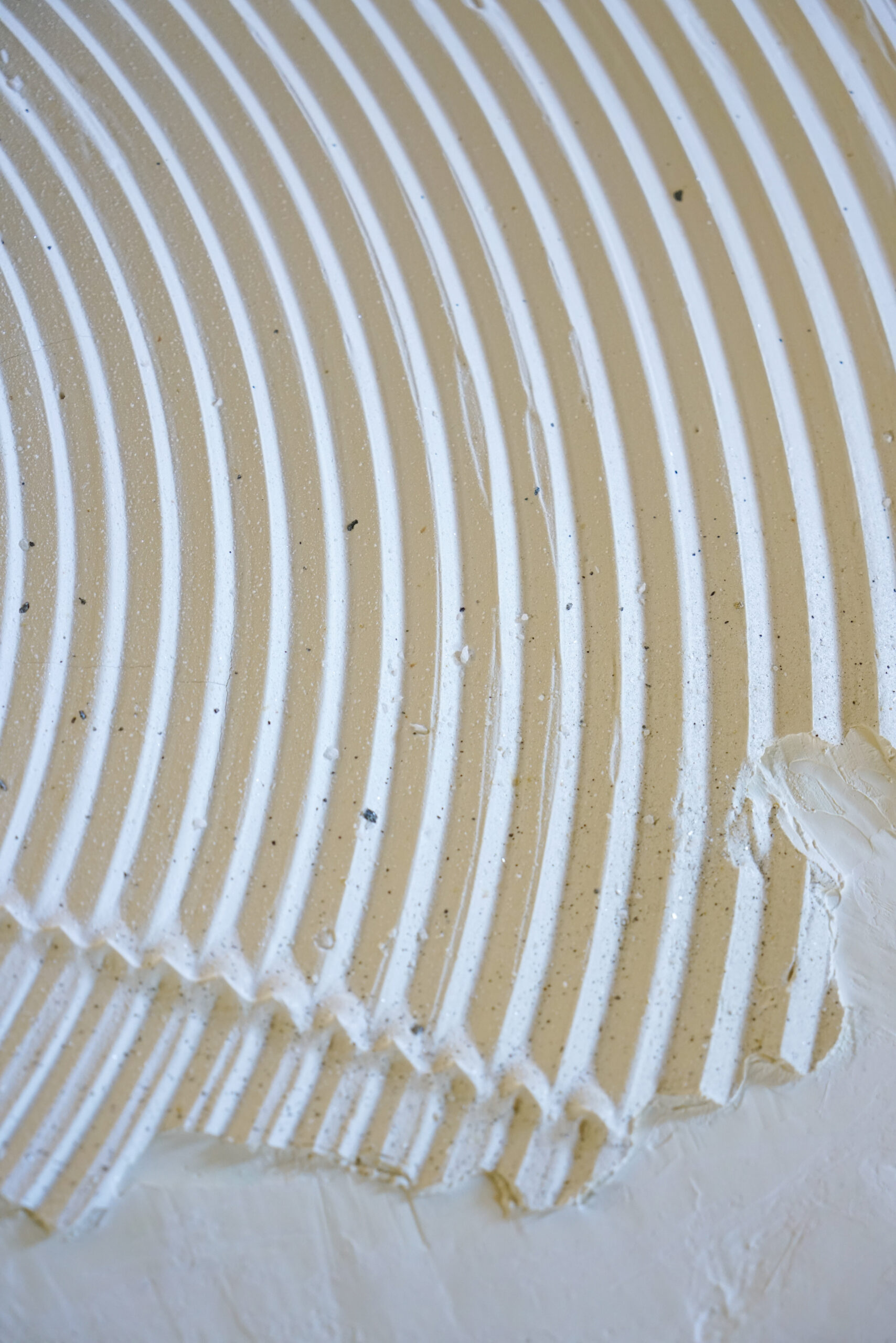
One More Hour of Light is part of the Eidôla cycle, an artistic research that conceives light as a tangible material of space.The term eidôla, derived from atomist philosophy, designates that intermediate substance formed between visible objects and the eye that perceives them. More than a theory of vision, it proposes a reflection on the interval: that field where light carries information, memory, and position.
The works presented at Espai Souvenir function as optical devices. They do not depict a specific landscape but rather activate the luminous conditions of the site. White surfaces and reliefs capture, divert, and concentrate variations of natural and artificial light. The work reacts to the time of day, the intensity of the urban exterior, and the presence and movement of visitors.
Under certain conditions, iridescent figures related to the so-called “Haidinger brushes” may appear, an entoptic phenomenon linked to light polarization. These forms do not strictly belong to the object but emerge within the physiology of vision itself. Perception thus ceases to be a stable instrument and becomes a sensitive, variable, and situated process.
The exhibition coincides with the switch to daylight saving time. Dusk is delayed by one hour. This administrative shift of time modifies the relationship between interior and exterior, between architecture and sun. The light passing through the space does not respond solely to a natural cycle but also to a collective convention.
On April 11th at 12pm the project activates outside the exhibition space through a collective action in the public realm. The pieces are temporarily moved outdoors to experience their refraction under direct light. In this displacement, the device transforms: solar intensity, urban surfaces, and shared presence amplify the perceptual phenomenon.
Curated by Fabrizio Contarino
with the support of Institut de Cultura de Barcelona
Odysseas Yiannikouris (1984) is a visual artist working between France and Barcelona.
His work explores landscape as a form of territorial archaeology, combining photography, installation, drawing, and text. Drawing from architecture and geography, he investigates translocal identities and the invisible dimensions of places in relation to the contemporary ecological crisis.
Trained as an architect, he spent a decade developing a critical perspective on landscape transformation. Following his residency at the Villa Medici in Rome (2017–2018), his practice shifted toward art, questioning the notion of “project.”
His work has been developed across international contexts such as Nature in Solidum (Haut-Jura), Crossroads (Spanish–French border), ¡Viva Villa! (Marseille), and Arte Laguna Prize (Venice).