Quinzena d'art - open call
Espai nyamnyam is once again opening a call for applications to participate in the Quinzena d’Art de Mieres, a paid training programme developed as part of the Vivim en un món devorat project. The fourth edition will take the form of four gatherings, running from Friday to Sunday, led by Lluc Mayol, Lucía Argüelles, Kanpoko bulegoa, Susana Cámara Leret, Ricardo Duque, and Ariadna Rodríguez and Iñaki Alvarez (nyamnyam). The programme also includes a research and creative residency for each of the selected participants.
In 2026, Vivim en un món devorat is part of the research project Materia prima, a shared proposal between artist Susana Cámara Leret and the collectives nyamnyam and kanpoko bulegoa (Marc Badal and Anne Ibañez), who, from three geographies — Ribera del Porma (León), the Ser valley (Girona) and the Luzaide valley (Navarra) — take everyday life and day-to-day experience as the “raw material” of their work. Over the course of two years, Materia prima brings together knowledge, practices and ways of understanding contemporary research and creation situated in rural contexts, opening up spaces to share experiences, doubts and ways of doing things.
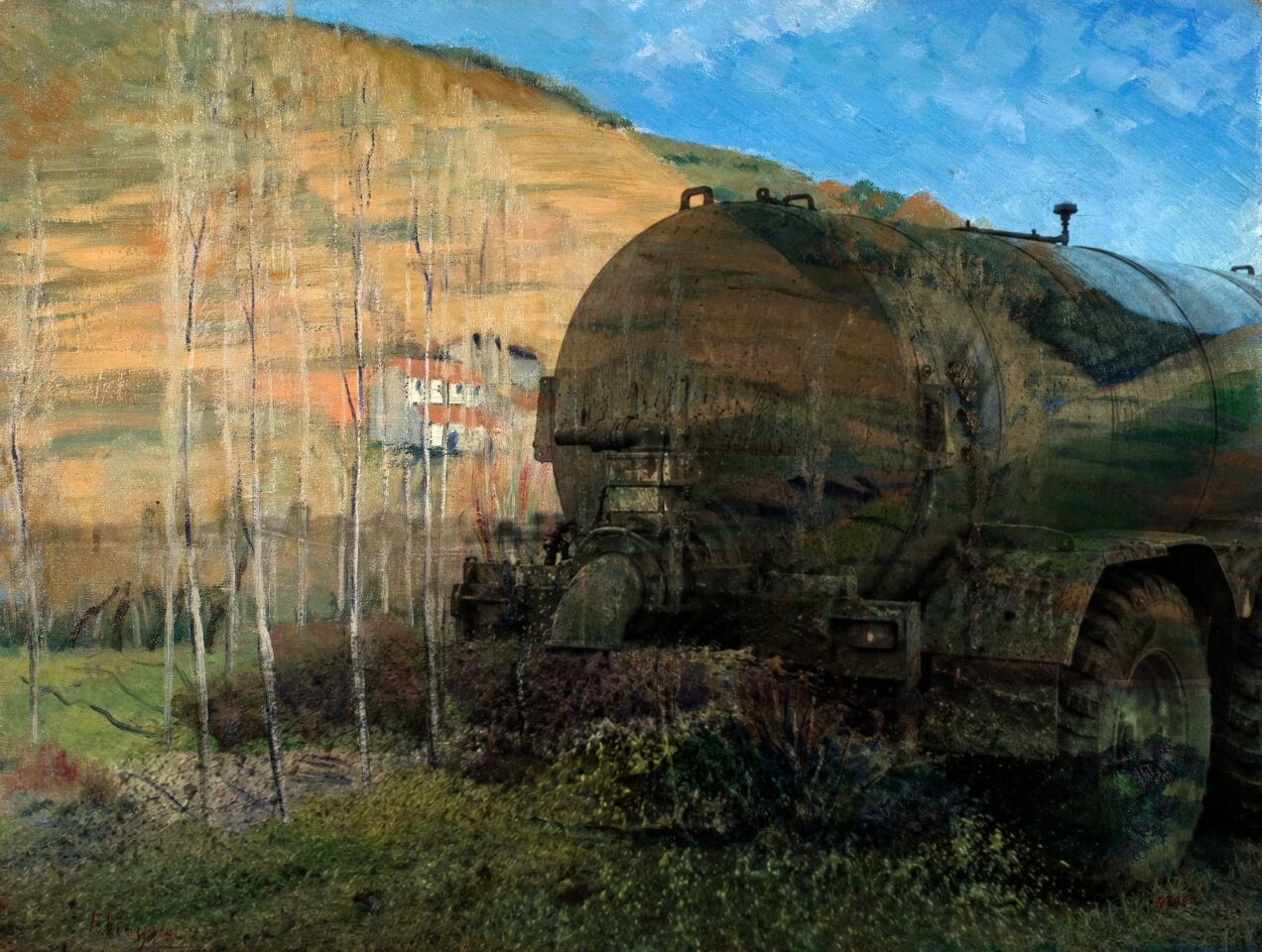
Within this framework, in 2026 Vivim en un món devorat reflects on the relationships between contemporary culture, rurality and territory through situated artistic practices. The project addresses issues such as agroecology, agricultural succession, knowledge linked to the land and the relationships between the territory and its transformations, as well as the impacts of intensive models, particularly the issues associated with slurry and soil and water pollution. These issues are closely linked to the global social impact perpetuated by colonial dynamics, such as land grabbing in the “sea of genetically modified soy” in the Southern Cone of the Americas, or the precarious conditions in which migrant people work on farms in our territory.
The programme analyses these challenges faced by contemporary rural territories, understanding the need to explore forms of production that are more closely adapted to ecological cycles, and examining how cultural practices can contribute to understanding these processes, generating spaces for exchange and proposing forms of relationship with the territory and with the ways of life that sustain it. At the same time, it advocates for the importance of situated practices, the relationship between everyday life and creation, and the construction of artistic and cultural processes in the medium and long term.
A context is proposed centred on contemporary artistic practice, based on transdisciplinary research approached from collectivity and regeneration. The programme aims to focus on tools or infrastructures, in dialogue with tradition and with the idea of the mas or masia as a centre of production.
We believe that, in the sociopolitical moment we are living through, it is essential to work towards the creation of hybrid spaces that provide real contexts for encounters between what we call “training” and what professionalisation subsequently entails, both in the field of art and culture and in other areas that can generate reciprocal exchanges. Today we live in societies where learning is an ongoing practice that is imposed upon us and required in every field as an accumulation of necessary information. In this reality, it is more urgent than ever to insist on forms of learning that are wild, non-aligned, slow, frustrating, shared and forgotten. Learning by creating one’s own learning. This is why the Quinzena d’Art de Mieres encompasses all these concerns, with the aim of being an inclusive and intersectional context, opening these workshops to diverse people and promoting contemporary cultural creation, practices and processes.