Élleipsi. PichiAvo
The contemporary city is a territory saturated with images. Every day we move through physical and digital spaces where visual stimuli constantly compete to capture our attention, shape our desires, and define the way we interpret the world. Within this context, certain artistic practices developed in public space continue to preserve a singular capacity: that of momentarily interrupting this accelerated circulation of information in order to generate a different experience of looking. The work of PichiAvo is situated precisely within this space of tension between image, urban space, and the cultural construction of memory.
Since their beginnings linked to graffiti and urban art, PichiAvo have developed a visual language capable of establishing an unusual dialogue between classical tradition and contemporaneity. Far from using Greco-Roman iconography as a simple aesthetic reference, their works activate a much more complex conversation about the permanence of certain cultural narratives and about the ways images survive, transform, or erode over time.
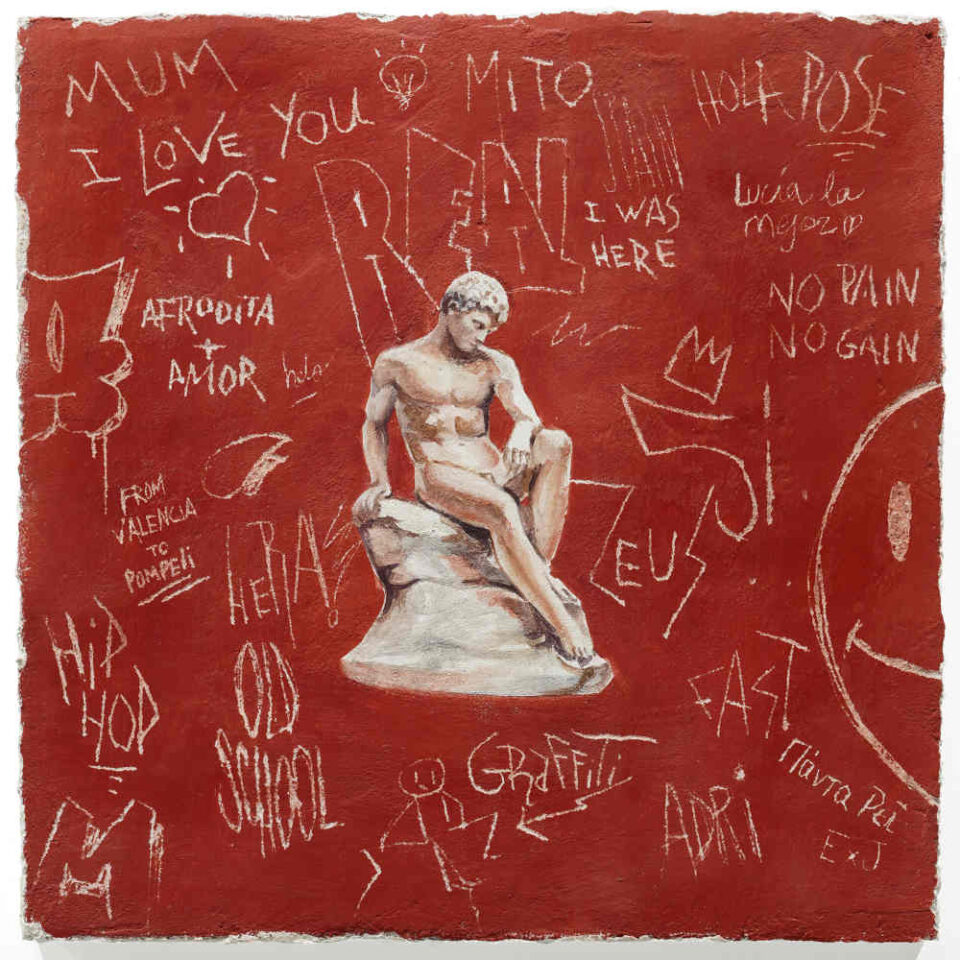
At SELTZ by Ritter Ferrer, the exhibition Élleipsi explores this idea of transformation through the central element of absence. The Greek term that gives the project its title means “lack” or “absence,” functioning here not as a melancholic reference to what has been lost, but rather as an active tool of visual construction. The works are not articulated through the fullness of the image, but through its interruptions. Fragmented classical figures, eroded surfaces, layers partially covering bodies, and frescoes that seem to emerge from wear transform emptiness into a fundamental part of the narrative. Absence ceases to be understood as deficiency and instead becomes a space that activates the gaze.
Text: José Luis Pérez Pont